The Occupational Therapy Service and Key Case Management ensures better client outcomes through a success early intervention partnership
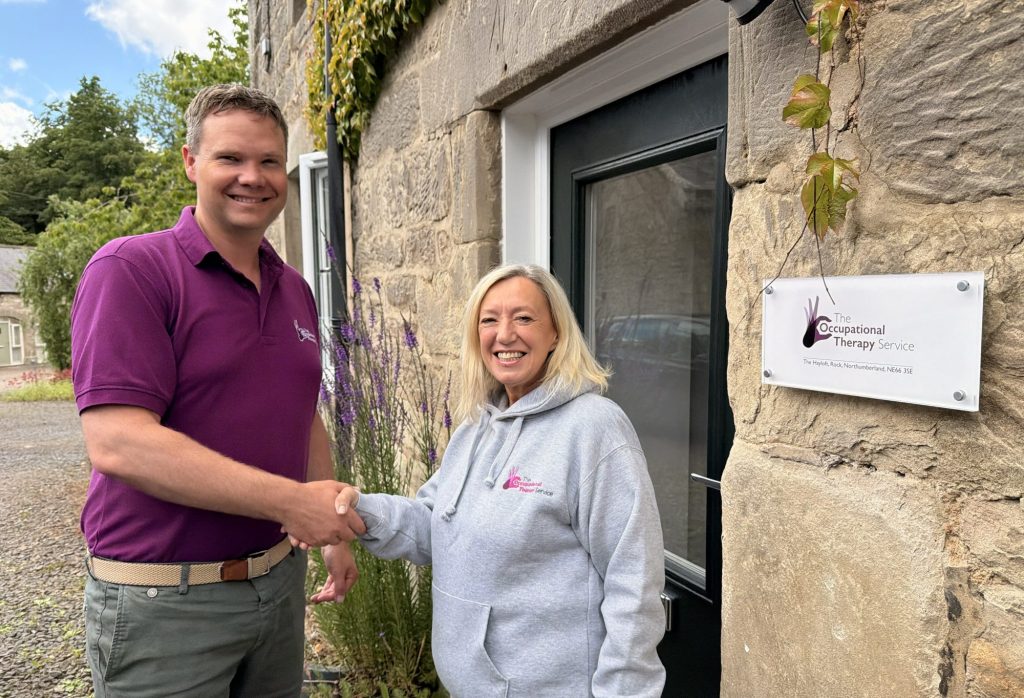
The Occupational Therapy Service (TOTS) is proud to collaborate with Key Case Management so earlier OT intervention can be provided for seriously injured clients. Highlighting a joint commitment to ‘person-led occupation’, this partnership facilitates faster referral for specialist occupational therapy assessments. With effective OT introduced at the earliest possible stage post-injury – not only is rehabilitation enhanced, clients are empowered to regain independence and quality of life sooner.
Through this client-centric partnership, individual with life-changing diagnosis benefit from:
Recommendations for accommodation and home adaptations
Support with essential equipment and assistive technology
Specialist guidance tailored to individual recovery goals
Key Case Management specialise in providing initial needs assessments and ongoing case management services for individuals affected by traumatic and acquired brain injuries; Complex orthopaedic injuries; Spinal cord injuries and Amputations. As a nurse-led service with deep roots in healthcare and rehabilitation, it brings clinical excellence and compassionate care to every case.
Lucie Robertson, Clinical Director for Key Case Management, recognises the added value this partnership provides:
“Together, we’re making recovery more responsive, more personalised, and more effective. Through our partnership with The Occupational Therapy Service, Key Case Management can offer early rehabilitation solutions that begin right at the hospital bedside. At a time of profound shock and uncertainty, our coordinated input provides immediate, meaningful support – helping clients feel more in control of their situation from the very start.”
Lucie adds: “This early intervention includes a specialist occupational therapy assessment and support with hospital discharge to appropriate accommodation. By acting swiftly, we ensure that rehabilitation begins when it’s needed most – laying the foundation for a smoother recovery and a more empowered future.”
Our values: Evidence informed practice
The Occupational Therapy Service adds value to Abacus Specialist Bathroom Solutions through support of its Abacus Academy educational programme
At the Occupational Therapy Service, we believe people deserve the very best of our profession. That means our decisions must be grounded in the latest evidence, research, and clinical standards, Real-life occupational goals guide every assessment, every recommendation, in every plan we make.
Evidence is part of how we think and how we work. It helps us stay accountable and clear but most importantly, it gives people confidence that the support they receive from us is safer, effective and meaningful to them. And at The Occupational Therapy Service we also feel it is our responsibility to share evidence-based practice with the wider occupational therapy community and the commercial world – we do this in many ways.
One example of this is our partnership with Abacus Specialist Bathroom Solutions. This assisted bathroom and bath manufacturer is a respected specialist in inclusive bathing and also delivers the Abacus Academy. The Academy is a free training resource for healthcare professionals which, with our knowledge, provides:
Accessible evidence-based education and product knowledge – online and at exhibitions
National lunch and learn sessions for occupational therapists and support staff, linking current research with everyday practise.
Training and development for teams and organisations who want to strengthen the clinical reasoning behind their decisions.
Specialist clinical expertise to bather assessments through associates with an average of 19.8 years postgraduate experience
We are fortunate to have a large network of highly skilled occupational therapists working in specialist fields across the UK. We draw on their experience every day as they understand what good evidence looks like and how to apply it in real world settings, such as with Abacus bathing provision. They also know how to explain it in a way that makes sense to the people we support and the companies we partner with.
Evidence informed practise isn’t just a business value we list, but more it’s part of the culture of The Occupational Therapy Service; you will find it in the questions that we ask, the justification in the decisions we make and how we teach others to do the same.
We are committed to raising the standard of occupational therapy wherever we work and because evidence guides our work, people can trust the difference it makes.
Our values: Enabling interdependence
Our business value: Enabling interdependence with John
We support people to engage in meaningful activities by fostering skills, confidence, and supportive environments, recognising that wellbeing is often built through connection with others.
Why it matters: Because thriving isn’t about doing everything alone, it’s about having the right balance of autonomy, support, and belonging.
Background
John is a man in his 40s who was referred to The Occupational Therapy Service (TOTS) via his solicitor, after sustaining a brain injury, he had associated health difficulties and a breakdown in his previous role at work.
By the time he was referred, John described feeling:
Overwhelmed by responsibilities at home and work
Unsure how to ask for support without feeling he had “failed”
Detached from activities and relationships that once mattered to him
He was seen jointly by a TOTS specialist occupational therapist and a clinical psychologist. Together, they focused on rebuilding his routines, confidence and support network in a way that reflected our value of enabling interdependence.
Presenting issues
In the early sessions, John described two very familiar extremes:
On some days he pushed himself to do everything alone, refusing offers of help, then feeling exhausted and resentful.
On other days he withdrew completely and waited for others to make decisions or solve problems for him, then felt useless or ashamed.
This showed up in several areas of occupation:
Work and productivity John wanted to return to some form of meaningful work but felt paralysed by anxiety and by the idea that he should be able to “slot straight back in” without any adjustments.
Home and self-care He took on a lot of hidden tasks at home, then avoided others entirely when he felt low. He struggled to explain this pattern to family, which led to tension and misunderstanding.
Leisure and social connection John had gradually dropped hobbies and social activities, telling himself he would go back “once everything is sorted”. In reality, his world had become very small.
Shared formulation
The OT and clinical psychologist developed a shared formulation with John:
Earlier in life, John had been rewarded for being “the strong one” who coped without complaint.
When his health and circumstances changed, he did not have a clear template for asking for support while still feeling competent and valued.
He swung between over-independence and over-dependence, without a stable middle ground.
They introduced the idea of interdependence as a working theme:
John’s wellbeing and identity did not have to rely on doing everything alone.
Equally, he did not need to hand over responsibility for his life to professionals, family or employers.
Instead, the goal was to build skills, confidence and environments where he could take an active role, supported by people around him.
Interventions
a) Clarifying what matters to John
Through occupational therapy sessions, John identified:
Activities that gave him a sense of competence (for example, practical tasks, mentoring younger colleagues, problem solving).
Relationships where there was potential for mutual support, not just one-way care.
What “a good week” would look like if he had the right balance of autonomy and help.
This gave a clear occupational focus rather than a vague aim to “feel better”.
b) Building skills and confidence
The OT and John worked on:
Gradually reintroducing structured daily routines that included purposeful activity, not just “to do” lists.
Practising communication skills to explain his needs and limits to family and, later, to his employer.
Planning a graded return to meaningful work, with realistic steps and adjustments.
The psychologist sessions focused on:
Challenging beliefs that “needing help means I am weak”.
Exploring where his strong sense of responsibility came from, and how it had helped and hindered him.
Developing more compassionate self-talk when he was unable to manage everything alone.
Together, this work supported both the practical and emotional sides of interdependence.
c) Creating supportive environments
Alongside individual work, the OT and psychologist helped John to shape his environment:
At home, he agreed clearer roles and expectations with family, so that tasks were shared instead of taken on silently.
With his employer, he was supported to negotiate a phased return with adjustments that recognised both his strengths and his limits.
In his local community, he reconnected with one valued hobby and identified a peer group where there was genuine two-way support.
Rather than “fixing” everything for John, professionals helped to set up environments where he could participate fully with appropriate support.
Outcomes
Over time, John reported several changes:
He felt more able to say “yes” to help in some areas, while still taking the lead in others.
He noticed earlier when he was drifting into doing too much alone and could adjust before reaching crisis point.
His week included a better mix of work, home responsibilities, and activities that gave him a sense of joy and connection.
Relationships at home felt less strained, as he and his family had clearer expectations of each other.
From a service perspective, this case showed that:
Joint work between an occupational therapist and a clinical psychologist can support both behaviour change and the underlying beliefs that hold old patterns in place.
Focusing on interdependence, rather than pure independence, leads to more sustainable outcomes and better quality of life.
How this reflects “Enabling interdependence”
John’s story brings our value to life:
Fostering skills He rebuilt practical and communication skills to manage his day, ask for support and contribute to home and work life.
Building confidence He was able to see himself as capable and resourceful, even when he needed adjustments or help.
Creating supportive environments We worked alongside John, his family and his employer to shape environments that made participation possible, rather than expecting him to adapt alone.
Balancing autonomy, support and belonging John did not return to doing everything by himself, and he did not stay in a place of dependence. Instead, he found a more balanced position where he could take the lead in his own life, held in connection with others.
This is what enabling interdependence looks like in practice.
Our values: Ethical and accountable partnering
Derby City Council and The Occupational Therapy Service work together to launch AI proportionate care reviews that respect resident rights, needs and wants.
Derby City Council is bringing artificial intelligence into the adult social care space with the support of The Occupational Therapy Service. The Council has a strategy that is strong in terms of technology and is developing an AI product that replicates care reviews for vulnerable people at home. This platform significantly improves efficiency when determining proportionate care for elderly and disabled residents who require moving and handling.
Commissioned by the Council, associates from The Occupational Therapy Service went into the community and collated OT focused information from 250 residents requiring carer visits. The evidence gathered has been used to model an AI programme. Now this data is on the local authority’s system, its adult social care team can assign care provision based on previous client profiles – meaning considered replication which results in care being provided quicker and more accurately. This approach results in a significantly lower need for staff to manually generate recommendations and justifies single handed care where appropriate. When the need for two carers can be reduced to one, staff resources are freed up and can be assigned more effectively whilst maximising budgets.
On an ethical and accountable level, the AI product underpins Derby City Council’s promise to making transparent decisions that uphold the principles of proportionate care – a value shared with The Occupational Therapy Service.
Andy Appleyard, Head of Adult and Social Care, is leading this AI project for Derby City Council. His team and The Occupational Therapy Service have worked together successfully as their integrity and client-centric approach is perfectly aligned. Andy explains:
“When it comes to care, this AI project is all about putting residents at the heart of the decision-making process. We want to support people to be as independent as possible.”
Andy continues: “The best way to support an individual typically involves two members of care staff going around moving and handling physically. This might be because of several identified risks such as challenging behaviour or safety concerns to members of staff in a property. To streamline efficiency, this AI programme removes the need for physical assessment of each new resident scenario to determine whether single handed care is possible – representing significant cost savings and efficient spend of the public purse.”
In terms of partnering with The Occupational Therapy Service Andy concludes: “The reason that we are so happy with The Occupational Therapy Service and specifically director Adam Ferry, is their priorities align with ours. They always put people at the centre of what they are doing. Adam and his associates conducted 250 moving and handling assessments and approximately 40% of those individuals have now moved to proportionate care. This we believe will be representative of the improvements that our new AI solution will deliver whilst honestly upholding the rights and needs of residents in the social care system.”
Our values: Creating inclusive environments for all
The Occupational Therapy Service collaborates with Newham Council to deliver enabling design guide for housing.
Commissioned by the London Borough of Newham Planning Department, The Occupational Therapy Service (TOTS) has helped to produce an evidence-based housing design guide for Neurodivergent residents and those with Learning Disabilities.
The project brought together residents, planners and service providers so that future housing developments would be more inclusive and accessible. Three associates from TOTS, all qualified to PhD level, applied their specialist occupational therapy and housing experience to model the planning design guide with a view to removing barriers for residents with additional needs. Dr Rachel Russell, Dr Marney Walker and Dr Jan Healey, overseen by TOTS Director Lucy Leonard, worked with the Newham planning department, led by Principal Planner, Claire Laurence.
The collaboration focused on research into housing design and how it impacts on physical and emotional factors. Findings and conclusions were then used to shape policy – ensuring the built environment remains inclusive. This was of particular significance in Newham with its current significant housing challenges in both the private and public sectors.
Newham has population growth that is causing overcrowding, long housing waiting lists and contributes to the inequalities many residents face. As an inner-city borough, the majority of new housing delivery is through high-rise properties which further underlines the need for efficient and appropriate design. With a target to increase dwellings by 45,000 homes in the next 15 years and to support the 10,000 residents in Newham that are Neurodivergent or have Learning Disabilities, the collaboration design guide represented a crucial deliverable.
Claire Laurance explains why TOTS input was so valuable: “We needed support from an OT perspective to ensure our planning policy remained enabling. As we were undertaking our regular 5-year review of planning policies, we reached out to TOTS as our previous policies sought to meet the needs of wheelchair users but did not fully consider the needs of Neurodivergent residents and residents with Learning Disabilities. We could see that TOTS had a proven track record in enhancing the provision of housing accessibility, especially when working with local authorities. Alongside completing a literature review, TOTS engaged at community level via stakeholder workshops and assessed recently built homes to gain a full understanding of wants, needs and risks.”
“TOTS synthesized their findings into a report which we are now looking to apply to larger scale developments. Their research was insightful as it highlighted many current issues with new build housing and how aspects such as single level living and flexible layouts benefit a specific cohort, especially in family and multigenerational homes. Personally, I found the whole project rewarding and it was a pleasure work with TOTS, they were fantastic and clearly passionate about inclusive housing.”
Lucy Leonard, OT and Director for The Occupational Therapy Service led the project from the clinical side. She added in conclusion:
“By applying their clinical knowledge to research, resident engagement and site visits, our associates have been able to produce a comprehensive design tool that futureproofs accessibility for Neurodiverse residents. This piece of work is indicative of one of our core values – to facilitate inclusive environments.”
“We strive to design and recommend solutions that remove barriers, promote accessibility, and allow people to thrive in their chosen occupations. We believe everyone should have the opportunity to take part in the activities that matter to them. For this reason, we thank Newham Planning Department for giving us this opportunity to demonstrate our skillset which always aims to make a positive impact on society.”
Headline sponsor The Occupational Therapy Service to deliver keynote showcase at CMSUK Conference
As headline sponsor, The Occupational Therapy Service, a leading independent practice in the UK, will be delivering a unique showcase presentation entitled ‘Occupational Therapy and Identity’ at the CMSUK Conference this March. Case Management Society (CMSUK) Conference, 27th & 28th March 2025, St John’s Hotel,651 Warwick Rd, Solihull. B91 1AT. Stand 53. The Occupational Therapy Service is […]
As headline sponsor, The Occupational Therapy Service, a leading independent practice in the UK, will be delivering a unique showcase presentation entitled ‘Occupational Therapy and Identity’ at the CMSUK Conference this March.
Case Management Society (CMSUK) Conference, 27th & 28th March 2025, St John’s Hotel, 651 Warwick Rd, Solihull. B91 1AT. Stand 53.
The Occupational Therapy Service is one of the UK’s foremost provider of occupational therapy, delivering clinical expertise for professionals such as case managers, solicitors and insurers. Alongside its case management referral caseload, this well-respected organisation has an exceptional track record in public and private sector consultancy and is a long-standing supporter of CMSUK. Its three occupational therapist directors, namely RCOT Fellow and WFOT President Samantha Shann, award-winning Adam Ferry and Clinical Director Lucy Leonard, are all renowned for their progressive approach and lead a 100+ strong team of associate occupational therapists. At CMSUK, Lucy Leonard will be available to discuss the unique value The Occupational Therapy Service delivers to case managers and why it is a proven specialist in enhancing positive client outcomes.
The overall theme for the Spring CMSUK Conference is “The Identity Journey” which aims to explore how clients rediscover their identity after a life changing injury. Delegates will have the opportunity to engage with leading equipment and service providers that can help clients navigate significant physical, mental and emotional changes. To highlight the pivotal role occupational therapy plays in this process, Lucy Leonard OT will deliver the opening presentation entitled:
Occupational Therapy and Identity
Rehabilitation isn’t just about recovery – it’s about rediscovering identity Keynote presentation – 9.10-9.20am, 27th and 28th March
Lucy is Clinical Director of The Occupational Therapy Service and has been practising for over 25 years. In the opening presentation on both days of the conference, Lucy will combine science and compassion to discuss centring a person’s identity in the rehabilitation process as being a core principle of occupational therapy. Focussing on enabling individuals to engage in meaningful activities that align with their personal values, preferences and cultural backgrounds, Lucy will demonstrate how regaining a sense of purpose, belonging and self-worth, leads to more effective rehabilitation outcomes. Lucy will use examples from her practice to provide context and inspiration to delegates.
Following Lucy’s presentation, delegates are encouraged to visit stand 53 to find out more about The Occupational Therapy Service and why an increasing number of case managers are sourcing their occupational therapy from this award-winning practice.
OT Today interview director and WFOT president Samantha Shann
OT Today speak to our director Samantha Shann, president of the World Federation of Occupational Therapists (WFOT), to find out more about the impact and influence that this organisation has around the world. Here is a snippet from the article published in February’s edition. WFOT is the international representation for occupational therapy. They provide expertise […]
OT Today speak to our director Samantha Shann, president of the World Federation of Occupational Therapists (WFOT), to find out more about the impact and influence that this organisation has around the world.
Here is a snippet from the article published in February’s edition.
WFOT is the international representation for occupational therapy. They provide expertise to inform and influence international policy and strategy development at a health systems level. The Occupational Therapy Service director Samantha Shann is also president of the WFOT, being elected to this position in 2021. Samantha has been involved in the WFOT for over 25 years and OT Today magazine recently met with her to find out more about the work WFOT do and the impact they have around the world.
Samantha says it is special because “Countries where occupational therapy is still developing influence international occupational therapy policies and ways forward, just as much as countries that have been practising for many years. We know occupational therapy is practised slightly differently around the world so WFOT and the profession needs to ensure that it meets local and cultural contexts.”
Samantha first got involved with WFOT when she moved to Uganda. She was one of the first teachers at the occupational therapy education programme there and supported the Uganda Association of Occupational Therapists (UAOT) in their application for full membership to WFOT. UAOT has gone from has gone from strength to strength and 25 years on Samantha says her ongoing membership and involvement with UAOT is something that is still important to her.
As for the WFOT, Samantha says “WFOT is an opportunity for individual occupational therapists to come together to participate in activities and to feel part of their own national occupational therapy association with those synergies between national and international thinking. My involvement in WFOT has encouraged me to step that bit further into new areas pushing myself and expanding my understanding of the profession.”
The next WFOT Congress 2026 is being held on 9-12 February 2026 in Bangkok, Thailand. Find out more at www.WFOTCongress2026.org If you are interested in presenting at the WFOT Congress 2026 you are invited to submit an abstract by 28th February 2025.
Immerse Yourself in the Theme of Identity The Occupational Therapy Service are the proud headline sponsors of the CMSUK Conference this year. Here our Clinical Director Lucy Leonard, explains why this theme resonates with The Occupational Therapy Service, and what she believes case managers will take away from this year’s conference. How ‘The Identity Journey’ theme […]
Immerse Yourself in the Theme of Identity
The Occupational Therapy Service are the proud headline sponsors of the CMSUK Conference this year. Here our Clinical Director Lucy Leonard, explains why this theme resonates with The Occupational Therapy Service, and what she believes case managers will take away from this year’s conference.
How ‘The Identity Journey’ theme resonates with our work
A person’s identity is a core principle of occupational therapy, because occupational therapists focus on enabling people to return to meaningful activities that are based on their values, their preferences and their cultural backgrounds. In order to do that, we make sure our occupational therapists conduct a holistic assessment to gather information on the person’s cultural, social, spiritual and occupational history, as well as their past experience and how that has shaped their life. This forms the goals that we set for them to achieve in their rehabilitation. It’s about giving people autonomy – the ability to make decisions for themselves without being influenced by external constraints, and thinking outside the box when they are setting their goals, because clients might not appreciate what they are able to achieve.
What case managers will take away from the Conference
I think the main thing is the quality of the speakers, and the broad range of people who are going to be delivering presentations over the two days. There are going to be lots of lived experiences shared which is crucial to understand our client’s journey, as well breakout sessions, to allow people to get fully immersed in learning about identity, and that theme is going to run right through the two days. I think it’s important to go with an open mind, and to listen and learn. And to learn from each other as well, because there are going to be so many case managers there who have such a lot of experience to share from their practice.